
Website speed and user experience have become major ranking factors in Google search results. In 2026, businesses in India are focusing more on website performance because users expect websites to load quickly and work smoothly on mobile devices. One of the most important concepts behind modern SEO performance is Core Web Vitals.
Core Web Vitals are a set of website performance metrics introduced by Google to measure real user experience. These metrics help Google understand whether a website is fast, stable, and user-friendly. Websites with poor Core Web Vitals may experience lower rankings, higher bounce rates, and reduced conversions.
This guide explains what Core Web Vitals are, why they matter, and how businesses can improve them for better SEO and website performance.
What Are Core Web Vitals?
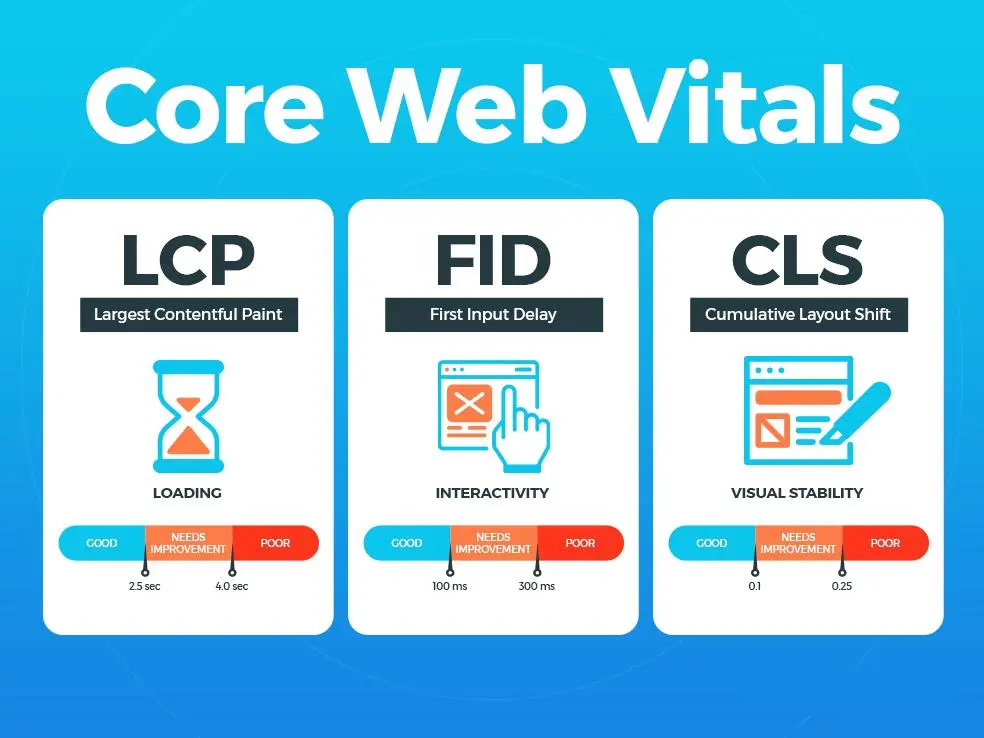
Core Web Vitals are performance metrics used by Google to evaluate user experience on websites. They focus on loading speed, responsiveness, and visual stability.
The three main Core Web Vitals are:
- Largest Contentful Paint (LCP)
- Interaction to Next Paint (INP)
- Cumulative Layout Shift (CLS)
1. Largest Contentful Paint (LCP)
LCP measures how quickly the main content of a page becomes visible to users.
A good LCP score means visitors can see important content quickly.
- Good: under 2.5 seconds
- Needs improvement: 2.5–4 seconds
- Poor: above 4 seconds
Common Causes of Poor LCP
- Large images
- Slow hosting
- Heavy themes
- Too many scripts
2. Interaction to Next Paint (INP)
INP measures how quickly a website responds when users interact with it.
Examples include:
- Button clicks
- Menu interactions
- Form submissions
Common Causes of Poor INP
- Heavy JavaScript
- Third-party scripts
- Unoptimized code
3. Cumulative Layout Shift (CLS)
CLS measures visual stability. If elements move unexpectedly while loading, users may click the wrong button or become frustrated.
Common Causes of Poor CLS
- Images without dimensions
- Late-loading ads
- Dynamic content shifts
- Unstable fonts
Why Core Web Vitals Matter for SEO
Google uses Core Web Vitals as part of its ranking system because user experience is important.
- Better rankings
- Lower bounce rate
- Higher conversions
- Improved mobile experience
- Better user satisfaction
How to Check Core Web Vitals
Several tools can analyze your website performance.
- Google PageSpeed Insights
- Google Search Console
- Lighthouse
- GTmetrix
How to Improve Core Web Vitals
1. Optimize Images
- Compress images
- Use WebP format
- Enable lazy loading
2. Improve Hosting
- Use faster hosting
- Choose cloud hosting
- Enable caching
3. Reduce JavaScript
- Remove unnecessary scripts
- Delay unused JavaScript
- Optimize apps and plugins
4. Improve Mobile Optimization
Most Indian traffic comes from smartphones.
- Responsive design
- Fast mobile loading
- Touch-friendly interface
Core Web Vitals for WordPress and Shopify
Both WordPress and Shopify websites can face Core Web Vitals issues.
WordPress Issues
- Too many plugins
- Heavy themes
- Poor hosting
Shopify Issues
- Large banners
- Too many apps
- Heavy tracking scripts
Questions People Ask in Alwar
1. What are Core Web Vitals?
They are Google performance metrics that measure website speed and user experience.
2. Do Core Web Vitals affect rankings?
Yes, Google considers them as ranking signals.
3. Can poor Core Web Vitals reduce traffic?
Yes, slow and unstable websites may lose rankings and visitors.
4. Can businesses in Alwar improve Core Web Vitals?
Yes, businesses in Alwar can optimize hosting, images, and website structure.
5. Which is the most important metric?
All three metrics are important for overall user experience.
Final Thoughts
Core Web Vitals have become an important part of SEO and website optimization in 2026. Businesses that improve website speed, responsiveness, and stability can provide better user experiences and improve Google rankings. Whether you use WordPress, Shopify, or custom websites, optimizing Core Web Vitals is essential for long-term online success.
